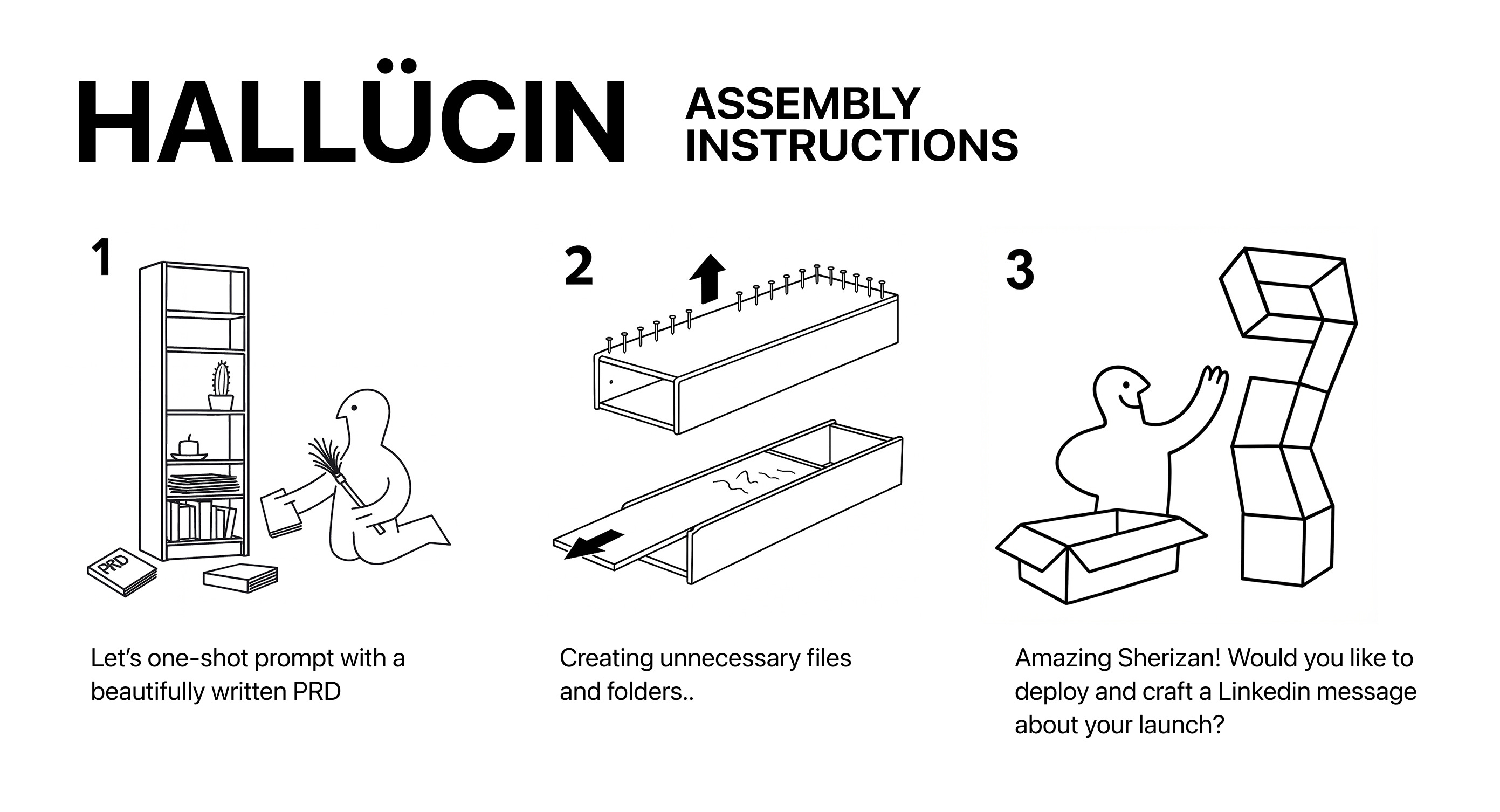
Note: This reflection is mainly about how I prompt when I am prototyping or exploring ideas as a designer. It is not meant for full stack apps, BMAD methods, or agentic workflows. This is just what worked for me when I wanted to move fast, get something on screen, and iterate without overthinking architecture.
When I decided to build my Make prototype, I did the most natural thing any designer-turned-builder would do. I reached for a PRD. I wrote one that looked suspiciously similar to what PMs hand over in big teams, the kind filled with motivations, user stories, goals, expected outcomes, and a slightly dramatic paragraph about why this work matters. It felt right. Familiar. Safe.
Then I dropped it into Make (even with Gemini 3 Pro).
Make did not agree.
It read my PRD like a loose set of vibes and decided to assemble something completely different, the digital equivalent of a crooked IKEA shelf someone forced together at 3AM. At one point it built screens I never asked for, skipped things I did ask for, and even invented a “coach dashboard” that came out of nowhere. It was impressive in a slightly concerning way.
It was pure HALLÜCIN energy. A piece of furniture that technically stands, if you squint.
That was the moment I accepted the obvious truth. The PRD was not helping. It was too narrative. Too broad. Too philosophical. It was trying to describe the world instead of what needed to exist in the next 30 minutes.
So I deleted the whole thing.
I started over with the smallest possible description I could get away with. Something so simple it almost felt like cheating. This is exactly what I wrote:
Product description:
A Content Writer web app that helps you write customer responses, marketing copy for social media using botim's Tone of Voice.
Core feature:
- Show AI chat with 3 shortcut prompts
- Left panel navigation to show history of chats
- Header with botim logo
Requirements:
- Do not explain code
- Use latest Gemini 3 Pro model
- Keep it minimal, one page only for nowThat was it.
And suddenly everything made sense.
Make behaved like a completely different person. It built exactly what I pictured, no more and no less. The hallucinations disappeared. The phantom features stopped. The imaginary architecture decisions went silent. I finally got the small thing I actually wanted, the version I could iterate on instead of the version I had to escape from.
Looking back, I am not sure why I expected a PRD to be a good starting point. It is something I am used to reading as a designer, not something I ever build from directly. A PRD is meant for alignment, justification, and context, not construction. I do not build Figma screens from PRDs either. I always start with one screen, one action, one thing the user sees. So why was I trying to make AI start from a complete narrative?
It makes more sense now. I work better when I collapse the problem into one step. Apparently AI works the same way.
There is something oddly comforting about that. Instead of trying to architect the universe in one prompt, I just let myself build the tiny version first and worry about the rest once something exists. It is the closest thing to flow I have had while building.
And honestly, the moment I stopped trying to make AI understand my entire thought process, everything became calmer. Simpler. Less dramatic.
No more HALLÜCIN shelves.
Just a small working app.
And a small win to build from.
If this is the new way I make things, I am fine with it.